KDP Password Book Keywords: Your Shortcut to Dominating a Profitable Niche
If you’ve spent any time exploring Amazon KDP, you already know that finding the right keywords can make or break your low-content book. The password log book niche is one of the most consistent earners—people need these books, they buy them repeatedly, and they often search for very specific formats. But guessing which keywords actually convert is like throwing darts in the dark. That’s exactly where a dedicated keyword research file changes everything.
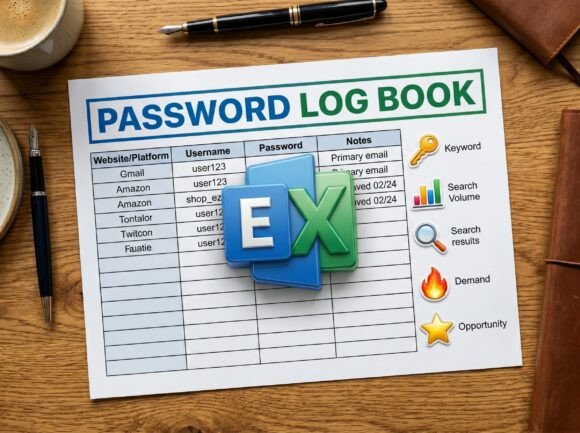
This isn’t just a random list of terms. It’s a carefully curated spreadsheet built around real search behavior from people who are actively looking for password books. The data includes search volume, competition levels, and a demand opportunity score that helps you spot the hidden gems. Instead of spending hours scraping tools or relying on hunches, you get a shortcut straight to what works.
Why the Password Log Book Niche Works So Well
Password books solve a universal pain point. Almost everyone has dozens of logins—email, banking, streaming, work accounts, shopping sites. Remembering them all is impossible, and using the same password everywhere is risky. That’s why physical password books remain popular even in a digital world. They’re offline, secure, and easy to keep by your desk.
But here’s the thing: the people buying these books aren’t a single, uniform group. They include seniors who prefer large print, professionals who want minimalist layouts, women who like decorative covers, and gift buyers looking for something practical. Each of these segments searches differently. A generic title like “Password Log” might get buried, whereas “Large Print Password Book for Seniors” or “Password Keeper for Women with Alphabetical Tabs” can rank much faster. The keyword research file helps you understand exactly which phrases have traction and which are too competitive to bother with.
Real People, Real Searches: Where These Keywords Come From
The beauty of this spreadsheet is that it reflects actual buyer intent. The terms aren’t guesses—they’re based on what people type into Amazon’s search bar. For example, a caregiver helping an elderly parent might type “easy to read password book”. A busy freelancer might search “password organizer for small business”. A college student might look for “mini password book for backpack”. Each of these shows up in the data, complete with metrics that tell you how many people search for it and how many other books are competing.
Think about the difference between targeting “password book” (millions of results) versus “large print password book with alphabetical tabs” (hundreds of results but still decent demand). The second phrase has far less competition, which means your book has a much better chance of showing up on the first page. That’s the kind of insight the keyword file delivers.
Use Case 1: Seniors and Large Print Buyers
One of the largest segments in this niche is older adults. They often have trouble reading small fonts, so they search for terms like “large print password book”, “easy to see password log”, or “senior password keeper”. If you create a book specifically with 24pt font or larger, you can target these phrases directly. The spreadsheet shows you which of these terms have high demand but low competition, so you can prioritize them in your title, subtitle, and backend keywords.
Consider a real scenario: your book is listed as “Large Print Password Book for Seniors – Easy to Read 8.5x11 with Alphabetical Tabs”. That title matches exactly what a caregiver is searching for. The keyword file gives you the confidence to use that phrasing because you know it has real search volume behind it.
Use Case 2: Women and Stylish Organizers
Not everyone wants a plain black cover. Many buyers, especially women, search for “cute password book”, “floral password keeper”, or “password organizer for women”. These keywords often have lower competition because most sellers focus on generic designs. By using the demand opportunity score, you can identify which decorative themes are currently under-served. If the data shows that “vintage password book” has moderate search volume but very few results, that’s your signal to create a cover with a retro pattern.
Practical example: You design a password book with a watercolor floral cover and use the title “Password Keeper for Women – Floral Design with Tabs – Small Size 6x9”. The keywords “password keeper for women”, “floral password book”, and “small password journal” are all backed by search data. Your book aligns with what real buyers are typing.
Use Case 3: Professionals and Minimalists
Business owners, freelancers, and corporate employees need password books that look professional. They search for “minimalist password log”, “business password organizer”, “password notebook for work”. These terms indicate a buyer who values clean layouts and serious branding. The spreadsheet can reveal which professional-oriented keywords have enough volume to justify a dedicated listing. You might even create a version with a leather-style cover and use keywords like “executive password book” or “office password keeper”.
Scenario: A freelance web designer has dozens of client logins. They search for “client password organizer” on Amazon. If your book is optimized for that phrase, it appears. The keyword file helps you know that “client password book” is actually searched a few hundred times a month with relatively few results, making it a smart target.
Use Case 4: Gift Givers and Holiday Shoppers
Password books make surprisingly good gifts. People buy them for retiring colleagues, for parents, or as stocking stuffers. Gift-related keywords include “password book gift”, “password log for dad”, “password keeper for mom”, or “ready to ship password book”. The data might show a spike in certain months. While you can’t see seasonality in a static sheet, you can combine the keyword list with Amazon trends. If you see “Christmas password book” as a low-competition term, you can create a holiday-themed version.
Example: In November, you upload a book titled “Password Book for Mom – Christmas Gift Idea – Red Poinsettia Cover”. The keyword file validates that “gift password book” is a real search term, so you’re not guessing.
How Different Creators Use the Keyword File
For new KDP publishers: You likely have limited time and budget. This spreadsheet lets you skip the trial and error. You can pick 3–5 keywords with high demand opportunity scores and create books specifically for those phrases. That increases your chances of getting initial sales and reviews.
For experienced publishers with many titles: You can use the data to fill gaps in your catalog. If you notice you have no large print books but the keywords show strong demand, you can quickly create a new interior using the same cover style. The keyword file acts as a roadmap for expansion.
For bloggers and influencers promoting password books: You can use the keyword list to craft blog posts or social media content that matches what people search for. For example, write a post titled “The Best Large Print Password Book for Seniors” and link to your KDP listing optimized with those same keywords.
For educators teaching low-content book creation: The spreadsheet serves as a real-world teaching tool. Show students how to evaluate search volume and competition before they design a book. It makes the concept of keyword research tangible.
What to Consider Before You Download and Start Using It
First, understand that keywords alone won’t sell a book. Your cover, interior formatting, and pricing also matter. The keyword file gives you a massive head start, but you still need to execute well. Use the data to inform your title and subtitle, but don’t stuff keywords unnaturally. Amazon’s algorithm looks for relevance, not repetition.
Second, the metrics are a snapshot. Search volumes can shift over time, especially as seasons change or new trends emerge. Use the spreadsheet as a baseline, then check Amazon’s auto-suggest bar periodically for fresh ideas. The demand opportunity score is especially useful because it combines volume and competition into a single number—stick to terms with higher scores.
Third, remember the backend 7 keyword slots. The file includes keywords that may be too long for your title but perfect for the backend. For example, “easy to fill password log book for elderly” might not fit in your title but can go into the keyword field. This is a subtle way to capture more traffic without making your listing look cluttered.
Finally, don’t ignore the long-tail variations. Many new publishers only chase high-volume terms and get lost in the competition. The spreadsheet reveals less obvious phrases like “password book with alphabetical tabs for office use” that have lower competition but still solid demand. These are often the easiest paths to a first-page ranking.
Turning Keywords Into Real Sales: A Quick Example
Let’s walk through a realistic scenario. You download the spreadsheet and find a keyword with a demand opportunity score of 85: “password log book for seniors large print”. It has moderate search volume and very few results. You decide to create an 8.5x11 book with 24pt font, a simple cover with a large “Password Log” title and a subtitle “Large Print Edition for Seniors – 100 Pages with Alphabetical Tabs”. You also add the long-tail phrase “easy to read password keeper for elderly” to your backend keywords.
Within a few weeks, you start seeing impressions. A caregiver types “password book for seniors large print” and your book appears on the first page. They buy it because it exactly matches what they need. That single keyword might bring you consistent sales for months. The spreadsheet didn’t do the work for you—it pointed you to the right opportunity, and you executed.
Why This Approach Aligns with Amazon’s Standards
Amazon’s algorithm rewards helpful, relevant content. By targeting specific buyer intent, your listing naturally includes the terms people actually use. This isn’t about keyword stuffing—it’s about understanding your audience. The spreadsheet helps you think like a buyer. When you write your description and bullet points, you can reference the pain points those keywords represent. For instance, if you used “password book for seniors”, your description can mention “easy-to-read large print” and “simple layout for tired eyes”. That creates a cohesive, helpful listing that both customers and Amazon value.
E-E-A-T (experience, expertise, authoritativeness, trustworthiness) applies here because you demonstrate knowledge of the niche. You’re not blindly copying what others do. You’ve researched what people need and delivered a product that meets that need. The keyword file is the research engine that powers that expertise.
Whether you’re creating your first password book or your fiftieth, having reliable keyword data removes the guesswork. You stop wondering if anyone will find your book and start publishing with confidence. The time you save on research can go into improving your cover design, formatting, and marketing. That’s the real value—working smarter, not harder, in a niche that keeps paying off.